




Reduce your environmental footprint.
Discover the world’s most sustainable cities.Major urban centres are adopting transport solutions that reduce environmental impact. They invest in public transport, increase green spaces and promote zero-emission transport options. For those seeking to follow this development and enjoy increasingly eco-friendly holidays, Enterprise has compiled a list of cities leading the way in sustainability. Let’s discover them.
Amsterdam, Netherlands.
The capital of the Netherlands, Amsterdam is the ultimate example of a sustainable city. Often referenced in discussions on the topic, it is also the world’s cycling capital. In fact, there are more bikes than people in the city. Why?
- Strong investment in safe cycle paths
- Bike parking facilities
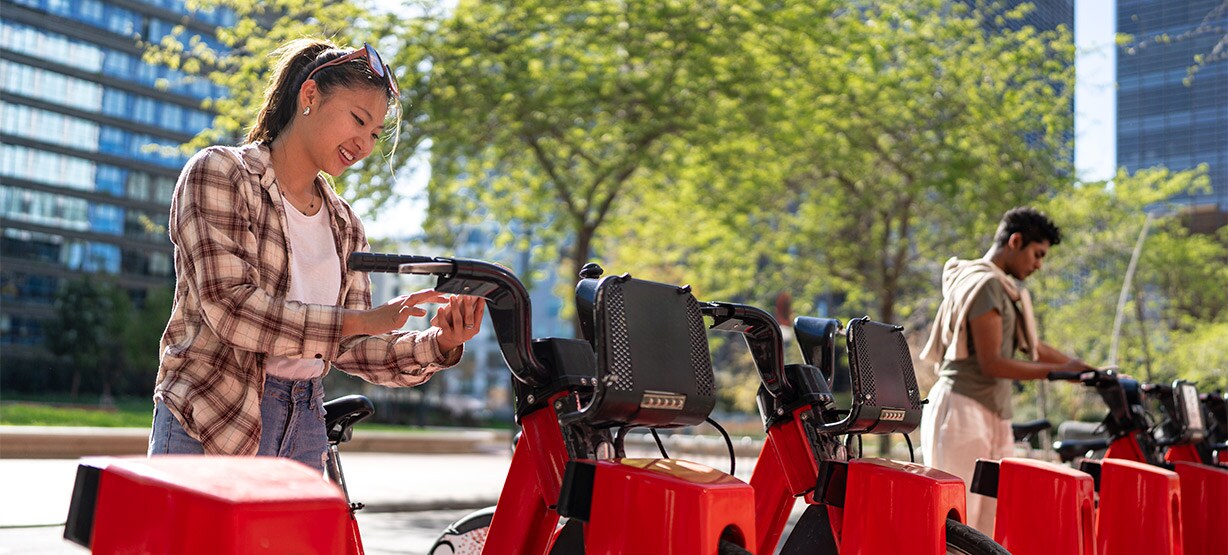
- An efficient bike-sharing system
The local culture values cycling as the main form of transport, contributing to a cleaner, quieter and healthier city.
Copenhagen, Denmark.
Copenhagen has committed to becoming the world’s first carbon-neutral capital by 2025. To achieve this, the city has implemented a high-quality cycle network, increased electric public transport, and introduced incentives for car sharing.In addition, it has invested in smart technologies to manage traffic and monitor emissions in real time.

Bogotá, Colombia.
Bogotá has become a benchmark for sustainability in Latin America and globally. This is largely due to significant investment in its public transport system, such as TransMilenio, and dedicated cycle lanes available on Sundays and public holidays.
Oslo, Norway.
Oslo has made efforts to eliminate cars from the city centre, replacing them with:
- More pedestrianised areas
- An expanded cycle network
- A strong electric public transport system
The city also offers generous tax incentives for electric vehicles, making them an increasingly popular choice among residents.
Is ecomobility essential for cities
Yes. Cities are responsible for a large proportion of global greenhouse gas emissions, and the transport sector is one of the main contributors. Implementing ecomobility solutions allows for:
- Reduced carbon footprint
- Improved air quality
- Decreased urban congestion
- Healthier lifestyles
Furthermore, sustainable cities tend to be more resilient, inclusive, and economically dynamic.
What challenges do sustainable cities face?
The main challenge is effectively implementing ecomobility solutions, which involves:
- Resistance to changing habits
- Need for greater infrastructure investment
- Integration of different transport modes
- Ensuring accessibility for all
However, these cities show that with strategic planning, community involvement and technological support, it is possible to overcome these barriers.
The role of technology and the future of mobility.
Technology plays a crucial role in the transition to ecomobility. This includes integrated mobility apps (MaaS – Mobility as a Service), urban sensors, and artificial intelligence for traffic optimisation. Sustainable cities are transforming how we move.

The road to greener cities begins with Enterprise.
Enterprise also plays a key role in promoting ecomobility. How? By offering shared mobility solutions through the rental of electric and hybrid vehicles. This not only helps reduce reliance on private cars but also promotes more sustainable alternatives. We believe ecomobility is more than a trend, it’s a necessity. That’s why we’re committed to promoting more conscious, efficient and eco-friendly mobility. Join the movement and help build a more sustainable urban future.